Pruning and tree care in the Luberon: expert craftsmanship for exceptional gardens
You return to your property in the Luberon. The centuries-old olive tree you cherish has lost its distinctive shape, its branches growing in every direction. The avenue of cypress trees that once framed the view towards your bastide is becoming overgrown and losing its elegant form. The box hedges in your formal French garden have lost the geometric precision that gave them their character.

It is not a question of neglect. It is a question of proper pruning: the right technique, at the right time, for the right species.

In the Luberon, high-end architectural pruning is about more than simply cutting branches. It is about sculpting the silhouette of a tree so that it harmonises with its surroundings, the stonework and the light. Horizon Luberon cares for your olive trees, cypress trees and box hedges with qualified tree care specialists, professional equipment and an in-depth knowledge of Mediterranean plant species gained through years of experience in the region.

Mediterranean cypress pruning: Elegance and structure

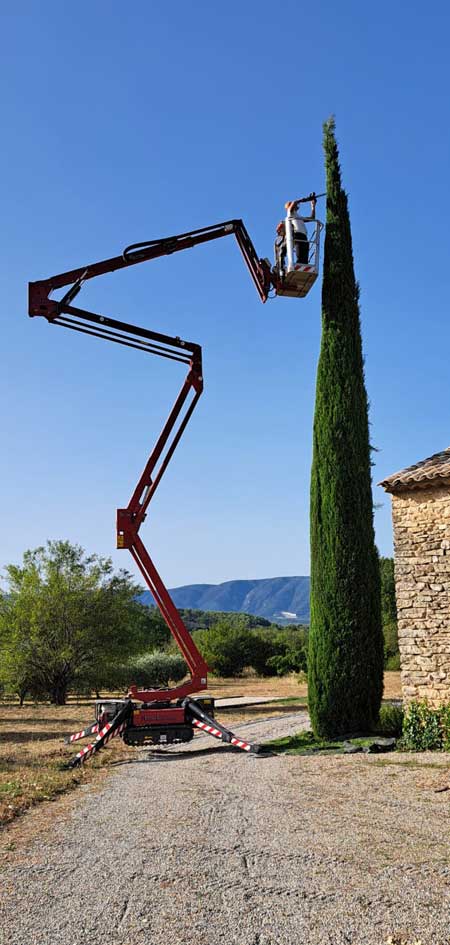
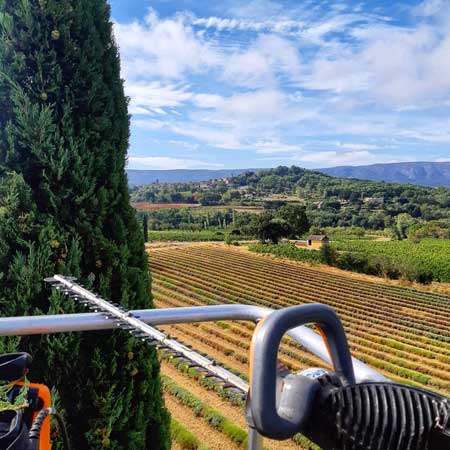
The cypress tree is the defining vertical feature of the Luberon landscape. Whether planted in avenues, hedges or as a standalone specimen, it brings structure to a property with remarkable simplicity. Left unmaintained, it spreads, becomes sparse at the base and eventually overwhelms the landscape rather than enhancing it.
Horizon Luberon s’en occupe : redonner au cyprès la ligne qui sert votre jardin, saison après saison.

Topiary pruning: Precision and lasting beauty

Topiary pruning requires regular care, regardless of the plant species. Boxwood is one of the most demanding examples: it can be shaped into almost any form, but a specimen left unpruned for two seasons can lose its definition entirely, while one pruned twice a year can retain its shape indefinitely. Horizon Luberon ensures that every carefully sculpted form maintains its beauty over time, across all species suited to topiary. 

Fruit tree pruning: Olive trees and fruit trees

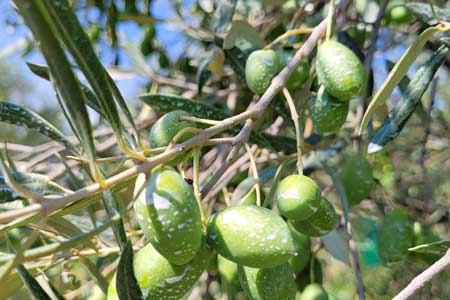
Fruit tree pruning has one simple objective: to direct the tree’s energy towards fruit production rather than unproductive growth, whether for olive trees or other fruit trees in the orchard.

For olive trees grown for fruit production, pruning is carried out after the harvest, in winter or spring, depending on the condition of the tree and the desired results. The same principle guides the pruning of almond trees, fig trees and stone fruit trees: balancing woody growth and foliage, with winter pruning before sap begins to rise, to maintain an open, well-structured canopy and ensure the fruit remains easy to harvest. Horizon Luberon includes this service in the annual maintenance programme for properties with an orchard.

Fruit production and ornamental appeal are not mutually exclusive: an olive tree pruned for fruit production can also be beautiful. The requirements are more demanding and the range of possible shapes more limited, but the result is still a beautifully structured tree.

Tree pruning and removal: Safety and expertise
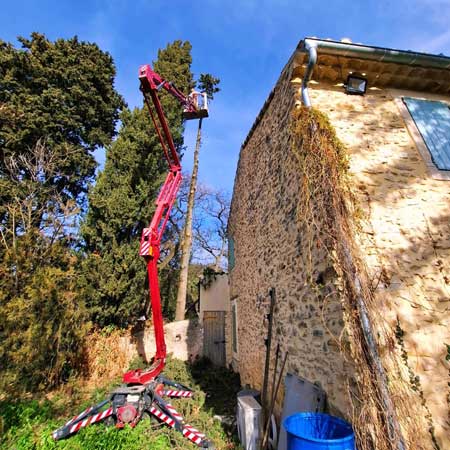
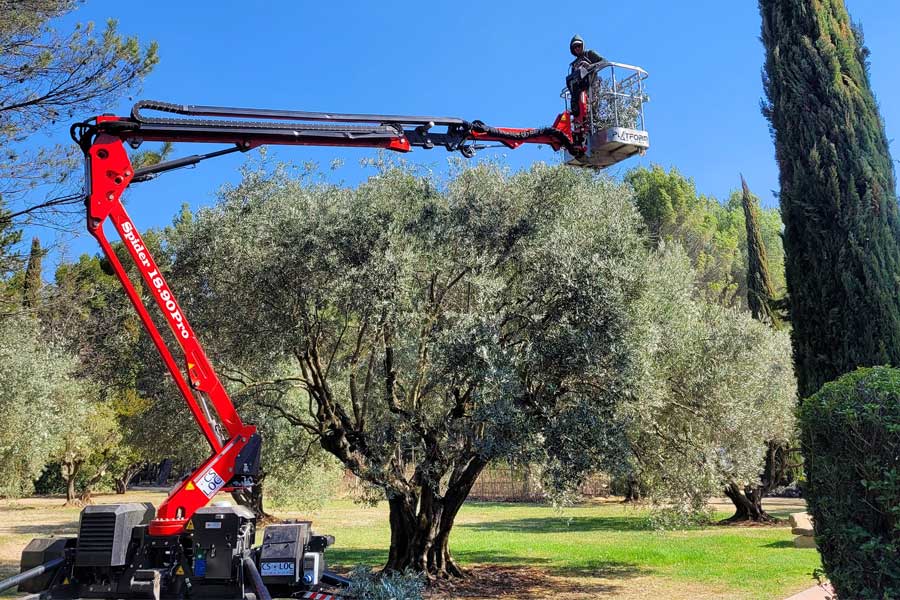
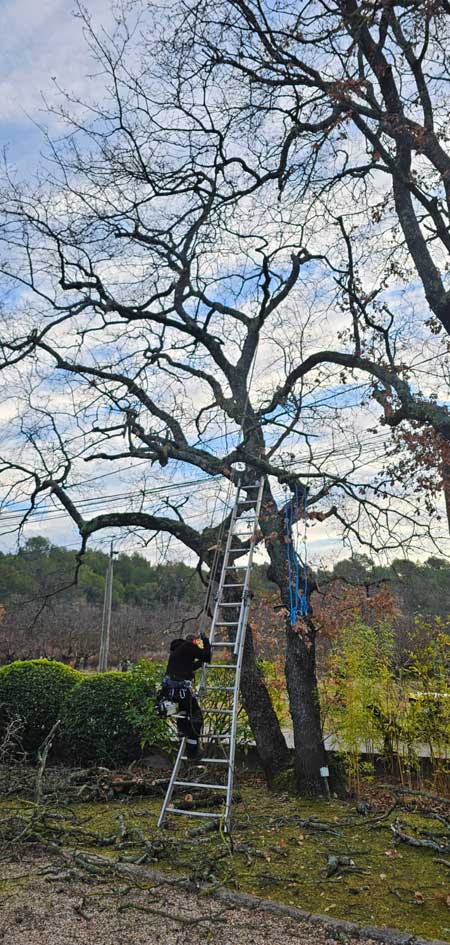
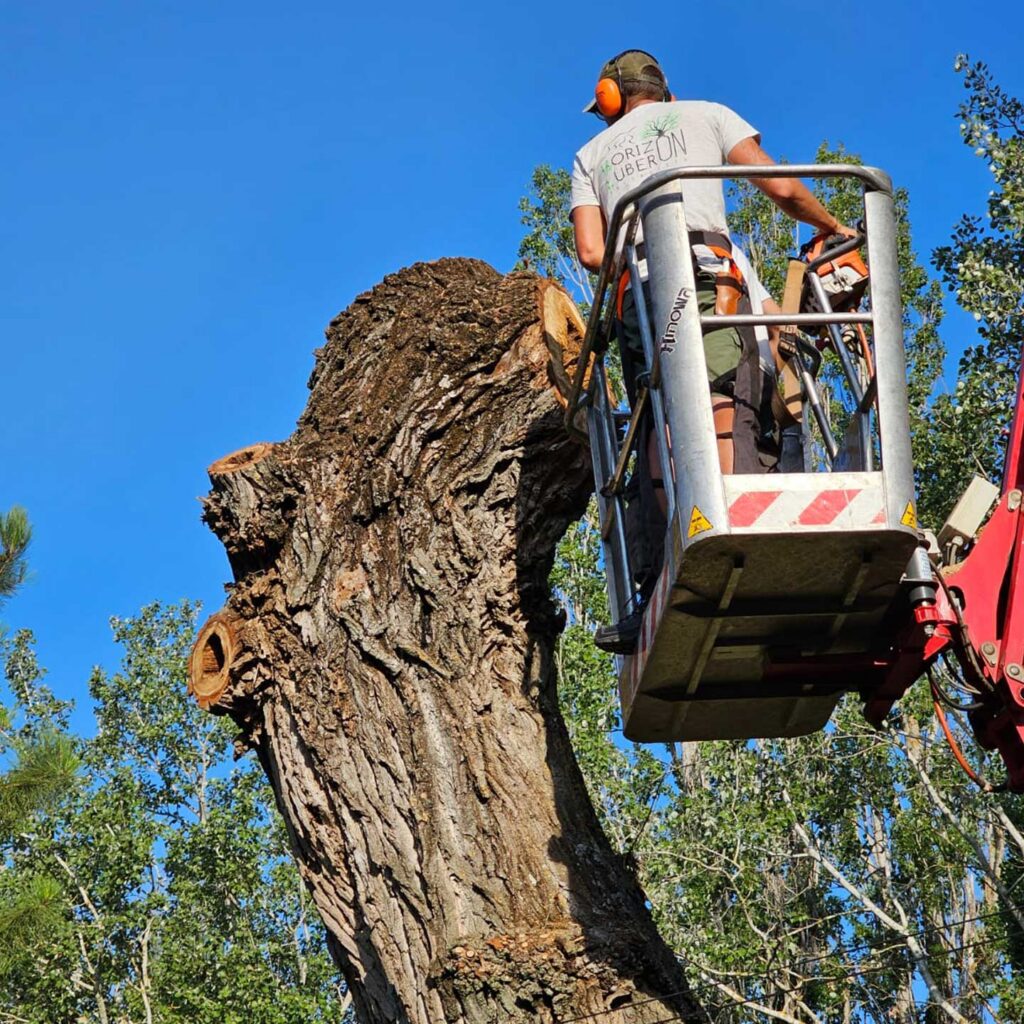
Climbing a ten-metre tree with a chainsaw is not a task to be taken lightly. Working at height, dealing with a tree weakened by a storm, or operating close to a roof or power line: every situation requires a thorough risk assessment before any cutting begins. Horizon Luberon carries out these operations with certified climbing arborists and insurance covering work at height.

Contact Horizon Luberon for your pruning project

Your olive trees have lost their shape. Your avenue of cypress trees is becoming overgrown. Your box hedges have lost their definition. These issues can be resolved more quickly than you might think with the right approach, a careful assessment of each tree and a tailored pruning programme.

Areas we cover : Gordes, Ménerbes, Lacoste, Bonnieux, Roussillon, Apt, Lourmarin, Cucuron and the surrounding towns and villages of the Luberon.

Frequently asked questions about pruning and tree care in the Luberon

A tree left unpruned for several seasons can develop an unbalanced structure, overly long and structurally weak branches, and dense foliage that encourages fungal diseases. In the Luberon, strong Mistral winds can turn a poorly attached branch into a dangerous projectile. An olive tree left unpruned for four or five years can become overgrown and difficult to reshape, with a significant decline in fruit production.
Several warning signs can be spotted without specialist knowledge: a main fork with included bark (where two trunks press against the bark between them rather than forming a strong union), a tree that leans progressively further from one season to the next, dead or partially dead structural branches, and visible fungal growth or decay at the base of the trunk. If you notice any of these signs on your property, a professional tree assessment is essential before the next storm.
The cost depends on four factors: the tree species and size, the complexity of the shape to be achieved or maintained, site accessibility, and the height at which work is required. We provide a no-obligation quotation following a site visit. This initial consultation also allows us to develop a pruning programme over several seasons, which is generally more cost-effective than arranging individual interventions at the last minute.
Yes. We work with several property owners in the Luberon on annual maintenance programmes that set out the work to be carried out, the schedule and the estimated budget. This arrangement is particularly suitable for second homes whose owners are unable to oversee each visit individually.
Yes. Horizon Luberon holds professional liability insurance covering work at height. We can provide proof of insurance upon request, before any work begins.
This is a major part of our work. We carry out maintenance while owners are away and document every visit with before-and-after photos. This report allows you to see exactly what has been done, without needing to be present in the Luberon.
Gordes, Ménerbes, Lacoste, Bonnieux, Roussillon, Apt, Lourmarin, Cucuron and the surrounding villages in the Vaucluse. If your property is located outside these areas, please contact us. Depending on the size of your property and the scope of the work required, we can find a suitable solution.
Yes. Clearing overgrown vegetation is often the first step in a maintenance programme when a property has been neglected for some time. Tree removal is carried out when a tree poses a danger or can no longer be saved. In both cases, we remove the green waste and make the work area safe.

Pruning and tree care in the Luberon

Architectural pruning: beyond ordinary pruning

Ordinary pruning ensures that a tree does not outgrow its space. Architectural pruning asks a different question: what shape should this tree take to complement the garden in which it stands?
An olive tree pruned into a flat canopy creates a horizontal line that complements a pool. The same olive tree, cloud-pruned, brings movement to a gravel garden. These are not mere decorative flourishes: they are deliberate design choices that shape a garden’s character for decades.
In the Luberon, this expertise has a long history. The gardens of traditional Provençal country houses, the topiary of properties in Gordes, and the avenues of cypress trees that define the landscapes of Ménerbes and Bonnieux all depend on skilled, consistent pruning carried out over time.

Why choose Horizon Luberon over another service provider?

Two things distinguish a landscaper who carries out pruning from a specialist in architectural pruning.

The first is understanding the tree. Before making a cut, our tree care specialists assess each tree’s physiology: its health, natural structure, previous growth and signs of earlier pruning. A century-old olive tree cannot be pruned in the same way as a vigorously growing ten-year-old tree.

The second is consistency over time. A garden takes years to develop. Poor pruning in one season can take two or three years to correct. We have worked with several property owners in the Luberon over multiple seasons, allowing us to monitor the development of their trees and adapt each intervention to a long-term maintenance programme.
For work involving particular risks, such as a tree close to a power line, roof or retaining wall, we carry out a preliminary assessment and adapt our working procedures accordingly.

Certification and qualifications of our tree care specialists

Working at height is not without risk. It requires specialist training, appropriate equipment and insurance that covers the risks involved.

Our tree care specialists are qualified to work at height. They have undergone specialist technical training and use compliant personal protective equipment (harnesses, safety ropes and helmets), as well as professionally maintained tools. Every intervention is covered by our professional liability insurance.

In practical terms, if we are working on an eight-metre cypress tree beside your terrace, you can be confident that the risks are being properly managed, not underestimated.

Olive tree pruning: shape and longevity

The olive tree is an iconic feature of the Luberon landscape. Its longevity, drought resistance and sculptural beauty make it a centrepiece of many properties in the region. But its long life comes with a need for regular pruning: without proper care, an olive tree becomes overgrown, develops dense foliage and loses its distinctive shape. Horizon Luberon preserves that shape, one tree at a time.

Ornamental pruning: cloud, flat-canopy and topiary shapes

Ornamental olive tree pruning aims to create a distinctive shape that can be maintained over time and complements the garden’s design.

The three main shapes we create in the Luberon:
– Cloud pruning : rounded, cloud-like clusters of foliage inspired by Japanese niwaki techniques, adapted to the Mediterranean olive tree. Ideal for contemporary gardens with a strong emphasis on stone and gravel.
– Flat-canopy pruning : horizontal tiers that create a strong visual structure. Ideal for a terrace or pool that the tree is intended to complement.
– Free-form topiary : a refined natural silhouette, without excessive geometric shaping, that reveals the tree’s inherent structure while keeping its growth under control.

Each shape is developed over two or three seasons. The first pruning establishes the structure; subsequent pruning refines it.

Fruit production pruning: optimising the harvest

The aim of fruit production pruning is simple: to direct the tree’s energy towards producing fruit rather than unnecessary vegetative growth, whether on olive trees or other fruit trees in the orchard.

For olive trees grown for fruit, pruning takes place after the harvest, in winter or spring, depending on the tree’s condition and the owner’s objectives. Almond, fig and stone fruit trees follow the same principle: balancing woody growth and foliage, with winter pruning before sap flow resumes, to create an open structure and make fruit easier to harvest. Horizon Luberon includes this work in the annual maintenance programme for properties with an orchard.

Pruning for fruit production does not mean sacrificing aesthetics: an olive tree pruned to bear fruit can still be a beautiful tree. The range of possible shapes is more limited and the requirements more exacting, but the tree retains a well-balanced silhouette.

Respecting tree physiology and the Provençal environment

Overly aggressive pruning of an old olive tree can cause significant water stress during the Luberon’s dry summers. Our tree care specialists adjust the amount of wood removed according to the season, the tree’s health and the weather conditions: pruning in May requires a different approach from pruning in August.

Pruning waste (wood and leaves) is either removed or shredded for use as mulch, according to your preference. We never leave cut branches on your property.

Pruning Provençal cypress trees

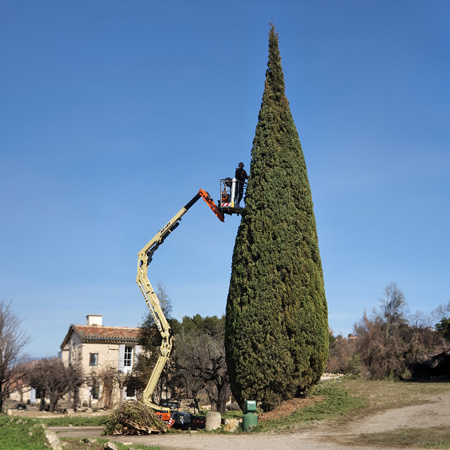
In the Luberon landscape, the cypress provides a distinctive vertical feature. Whether planted along an avenue, as a hedge or as a standalone tree, it gives structure to a property with relatively little maintenance, provided it receives regular care. Without pruning, it grows wider, becomes bare at the base and eventually weighs down the landscape rather than enhancing it. Horizon Luberon’s role is to preserve the cypress’s elegant outline, bringing out the beauty of your garden season after season.

Hedge and avenue pruning: tree care in Gordes and the villages of the Luberon

A well-maintained cypress hedge has an even surface, consistent foliage density and a base that does not become bare with age. For avenues of cypress trees, uniformity is key: each tree must maintain the same proportions to create a harmonious overall effect.

We regularly maintain cypress hedges and avenues in Gordes, Ménerbes, Lacoste, Bonnieux and Roussillon. Pruning is carried out by hand to preserve the trees’ natural growth, using pole tools or a cherry picker where necessary, depending on their height.

Architectural pruning: geometric shapes and topiary

A cypress tree can be sculpted into precise geometric shapes: columns, cones and carefully defined silhouettes. This topiary approach is particularly suited to formal French gardens, where structure takes precedence over a natural appearance.

Architectural pruning of Provençal cypress trees requires at least two visits a year: one in spring, before new growth begins, and another in late summer, to refine the summer’s growth without exposing the tree to the first frosts.

Disease prevention and maintaining tree vitality

The Provençal cypress is susceptible to cypress canker (Seiridium cardinale), a fungal disease that causes entire branches to die back and can kill a tree within a few seasons. Pruning with tools disinfected between trees is a first line of prevention.

During every visit, we systematically check for early signs of disease and alert the owner before an isolated problem spreads to the entire hedge.

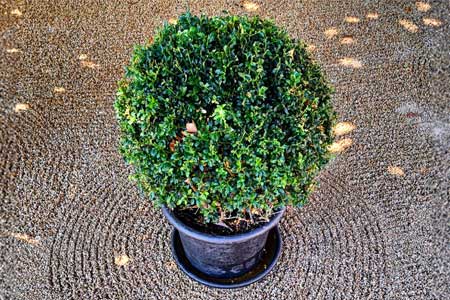
Boxwood ball and topiary pruning

Whatever the species, topiary demands precision and consistency. Boxwood is a perfect example: it can be shaped into almost any form, but a plant left unpruned for two seasons loses its defined outline, while one pruned twice a year retains its shape indefinitely. Horizon Luberon maintains this consistency, whether working with boxwood or other species suited to topiary.

The art of topiary: shaping formal French gardens

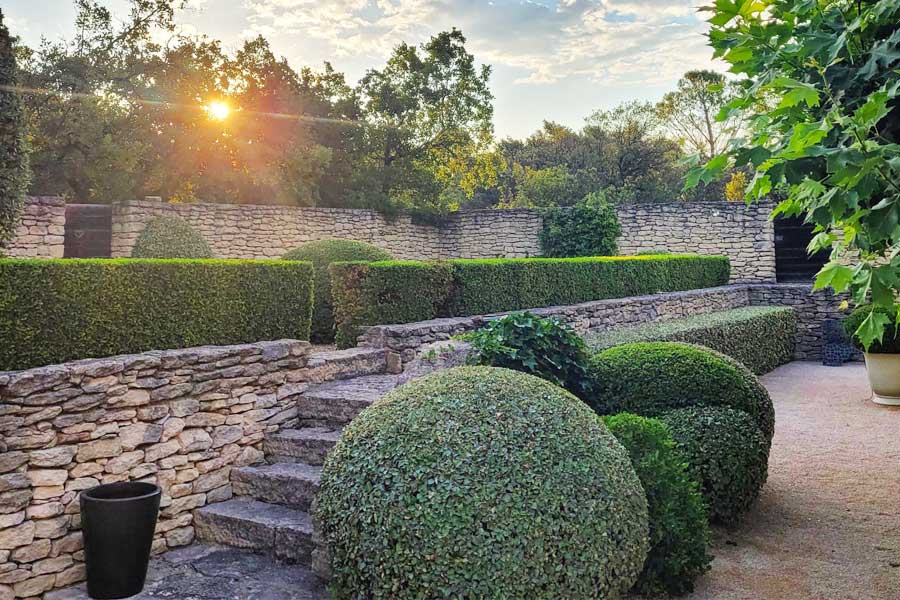
On Luberon properties where formal French gardens meet the garrigue and dry-stone walls, boxwood topiary provides a visual link: it brings order where natural vegetation might appear untamed and creates contrast with the garden’s more organic elements, such as gravel, lavender and rosemary.

Shapes we create include simple balls, ball-shaped crowns on stems, pyramids, cones, spirals and low hedges. The challenge lies not in creating the shape itself, but in maintaining its precision year after year.

Regular pruning and seasonal maintenance

Boxwood is pruned two to three times a year, depending on its vigour. The first pruning takes place after the spring growth (May–June), followed by a second in late summer (August–September). A light trim in autumn may be needed for particularly vigorous plants

For owners who are away, we document every visit with before-and-after photos. You can see exactly what has been done without needing to be present in the Luberon.

Disease prevention: box tree moth and other risks

The box tree moth (Cydalima perspectalis) is an invasive species whose caterpillars can strip a plant of its foliage in just a few days. Its presence in the Luberon has been documented for several years. Regular pruning helps detect the first signs of infestation and allows action to be taken before the damage becomes irreversible.

If we detect an infestation, we inform you immediately and recommend an appropriate treatment before our next visit.

Safety during tree pruning and removal

Working at height with a chainsaw on a ten-metre tree requires specialist expertise. Whether the work involves climbing, a tree destabilised by wind, or proximity to a roof or power line, every situation calls for a risk assessment before the first cut. Horizon Luberon entrusts this work to certified climbing arborists covered by insurance specifically for working at height.

Certified climbing arborists and professional equipment

Climbing a ten-metre tree with a chainsaw is not a task to undertake without proper training. Our climbing arborists are trained in rope-climbing techniques (ascent, positioning and managing falling branches), the use of PPE (personal protective equipment) and emergency procedures.

Our equipment includes certified climbing ropes, approved fall-arrest harnesses, helmets with face shields and hearing protection, climbing saws and chainsaws designed for working at height.

Compliance with safety standards and insurance cover

Every intervention is covered by our professional liability insurance, including work at height and damage to nearby property. We can provide proof of insurance upon request, before any work begins.

For work involving particular risks, such as a tree close to a power line, roof or retaining wall, we carry out a preliminary assessment and adapt our working procedures accordingly.

Risk management: hazardous trees and sensitive areas

A tree leaning after a storm, a cypress whose roots are lifting terrace paving, or a stone pine with a cracked main branch: each of these situations requires an assessment before any work begins. We offer an on-site assessment to determine the level of risk and recommend an appropriate solution, from crown reduction to tree removal.

Emergency work can be carried out within 24 to 48 hours, subject to availability. For scheduled work, we establish a timetable at the start of the season.

Seasonal pruning: when is the best time?

The Luberon has its own seasonal rhythms. January frosts can be severe, while the dry summer begins in June and stretches into September. These conditions determine the best times for pruning just as much as the botanical characteristics of each species.

Pruning calendar by tree species

Species Main pruning period Secondary pruning period When to avoid pruning
Ornamental olive tree Spring (March–April) None Dry summer (July–August)
Olive tree grown for fruit Winter (January–February) Spring (March) Autumn before harvest
Provençal cypress Spring (April–May) Late summer (August–September) Winter (frost)
Boxwood After new growth (May–June) Late summer (August–September) Extreme summer heat
Cedar / Pine Autumn (September–October) Late spring Midsummer
Fruit trees Winter (January–February) None Spring (flowering)
Plane tree Winter or spring None Summer

Spring and autumn pruning

Spring pruning is the most important for shaping: it makes use of the coming growth to establish or refine a tree’s form. This is the season for sculpting.

Autumn pruning is more conservative: it involves making minor corrections, refining the shape and preparing the tree for winter. Autumn is not the time to carry out major restructuring that should have been done in spring.

Emergency tree work after storms

After a period of strong winds, a tree may pose an immediate danger to a terrace, wall or building. We can respond within 24 to 48 hours to make the area safe: crown reduction or tree removal, depending on our assessment, followed by waste removal and securing the work area.

Tree species suitable for architectural pruning

Olive trees, Provençal cypress trees and boxwood

These three species are at the heart of our architectural pruning work in the Luberon. Each has its own requirements, pruning seasons, possible shapes and diseases to watch for. They can be found on the vast majority of properties in the region, often together in the same garden.

Olive trees require patience and an understanding of their natural structure: a cloud-pruned shape cannot be achieved in a single season. Provençal cypress trees need regular pruning and tools disinfected between trees. Boxwood can be shaped into almost any form, provided it is pruned frequently.

Cedars, pines and plane trees

Blue Atlas cedars and cedars of Lebanon are common on large properties in the Luberon. They are pruned in autumn: low or malformed branches are removed, hazardous forks are reduced, but the central leader is never cut.

Stone pines and Aleppo pines are pruned to remove dead branches and reduce the risk of falling limbs during strong Mistral winds. Here, pruning for tree health and safety takes priority over shaping.

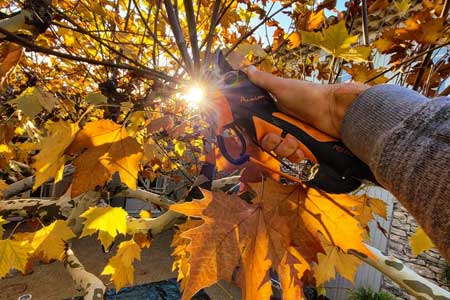
Plane trees are traditionally pruned using pollarding (cutting back the main branches to established pruning points) or trained into a curtain shape (maintaining a light, flat canopy). Both techniques require specialist expertise.

Fruit trees: almond, fig and stone fruit trees

Fruit production pruning aims to maximise yields by balancing woody growth and foliage. It is carried out in winter, before sap flow resumes, to create an open branch structure and make the fruit easier to harvest. For properties with an orchard, we can include this work in the annual maintenance programme.